When travelers think of sustainable tourism, they often picture remote eco-resorts, treehouses, or nature lodges. Yet even urban hotels with the right approach can contribute meaningfully toward more responsible, sustainable travel. Scene Bangkok Noi Hotel (Scene Bangkok Noi) is one such property in the heart of Bangkok that, while not marketed overtly as an “eco-hotel,” provides features and context that align with several principles of sustainable tourism. By offering guests a balanced blend of convenience, culture, and relatively low-impact amenities, this hotel helps foster tourism that is accessible, environmentally aware, and respectful of local communities. Scene Bangkok Noi Hotel contributes to sustainable tourism through responsible resource management, support for local artisans, and environmentally friendly guest services.
A Strategic Urban Location With Reduced Transit Impact
Scene Bangkok Noi is located on Arun Amarin Road in Bangkok Noi district, placing it within reach of many of Bangkok’s cultural and historical sites.
The hotel is only a short ride from landmarks such as the Grand Palace, the Wat Suthat, and the Rama VIII Park all reachable without the need for long commutes. Because guests can easily access multiple attractions close by, this reduces the reliance on long taxi rides or multiple short journeys across the city. Shorter travel distances not only save time and money but also lower emissions and traffic congestion especially important in a city like Bangkok, where transport-related pollution and traffic are significant concerns. By choosing a centrally located hotel, travelers inadvertently contribute to more sustainable urban mobility compared to flying in and out of peripheral resorts or commuting long distances daily.
Moreover, the hotel offers free self-parking and is within walking or short-ride distance to public transit and boat docks along the river enabling guests to combine walking, public transportation, and short rides. This flexibility helps promote lower-carbon travel behavior during a stay.
Simple, Efficient Facilities That Minimize Waste And Resource Overuse
Scene Bangkok Noi features a modest and efficient setup: 52 non-smoking rooms across four floors, each equipped with essentials air conditioning, a flat-screen TV with satellite channels, electric kettle and fridge, free Wi-Fi, and a private bathroom with toiletries.
From the perspective of sustainability, this kind of minimalism and efficiency can have several benefits. First, by avoiding excessive luxe e.g., no overly elaborate suites or excessive decoration the hotel reduces its resource footprint in terms of construction materials, energy use, and maintenance. Second, simple, well-kept amenities such as efficient air conditioning, in-room kettles, and refrigeration can allow guests to rehydrate (e.g., use refillable water, store leftovers) helping cut down on single-use plastics and unnecessary food waste from dining out every meal.
Daily housekeeping, safe-deposit services, and 24-hour front desk support offer convenience while enabling the hotel to manage resource usage thoughtfully (e.g., linen/towel reuse, controlled laundry, waste management).
While Scene Bangkok Noi does not publicly advertise a robust “green certification,” its restraint in scale and focus on essential, efficient services rather than opulent indulgence nudges it towards a low-impact, sustainability-friendly mode of operation.
Access To Local Culture, Economy, And Community
Sustainable tourism isn’t just about low environmental impact it’s also about benefiting local communities and enabling guests to meaningfully engage with the local culture. Scene Bangkok Noi’s proximity to Bangkok’s heritage sites, temples, local markets, and river transport routes positions guests to experience local life more authentically. Instead of staying inside a gated resort area, visitors are encouraged (by virtue of location) to walk, take local transport, explore neighborhoods, and dine in local establishments.
This kind of stay supports the local economy from street-side vendors and small restaurants to boat operators and cultural tourist sites rather than channeling all tourist spending into isolated resorts. By doing so, the hotel aligns with sustainable tourism’s ideals of responsible economic distribution and cultural immersion.
Additionally, the hotel seems particularly family- and group-friendly: soundproofed rooms, a swimming pool, and convenient amenities are among its features, making it viable for a range of travellers, from solo backpackers to families or multigenerational groups. This inclusivity encourages a broader demographic to experience Bangkok responsibly, rather than limiting tourism to high-end luxury travelers.
Outdoor Pool & Green Spaces: Relaxation Without High Impact
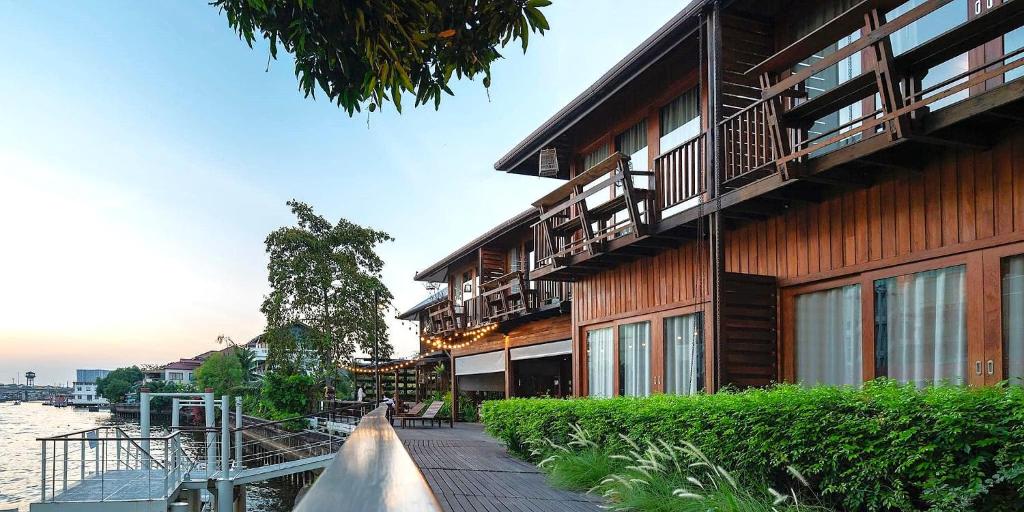
Scene Bangkok Noi includes an outdoor swimming pool and small garden/green areas uncommon for downtown hotels. Having such amenities in an urban hotel offers guests a chance to enjoy nature-like respite without heading far out of the city, reducing the need for travel to remote resorts or tourist-destination trips, which often involve high carbon footprint.
When designed and maintained appropriately, such green spaces and shared leisure areas can provide wellbeing benefits for both guests and staff without demanding the excessive resource expenditures typical of large resort complexes. The hotel’s setting and facilities suggest a balanced approach: offering comfort and leisure, but within a compact, resource-efficient urban format. Given that the hotel is relatively small (52 rooms) and spans only four floors, its overall footprint is modest compared to sprawling hotel/resort complexes helping keep environmental impact lower.
Affordability And Accessibility: Broadening Responsible Travel
A key component of sustainable tourism is accessibility — making travel feasible for a wider range of people, not just high-budget tourists. Scene Bangkok Noi offers rooms often described as budget-friendly (some sources note rates “from US$36”) for a 4-star classification.
This affordability means more travelers including students, budget-conscious families, solo travelers can experience Bangkok’s culture, heritage, and way of life without needing to book expensive luxury stays. As a result, the hotel promotes inclusive travel: opening doors for a diverse visitor base, enabling more people to travel responsibly and reduce per-capita tourism expenditure.
Moreover, because the hotel doesn’t demand premium rates for luxury-level services, it avoids over-consumption and encourages more modest, sustainable habits. Guests are more likely to appreciate the city and its heritage rather than focusing primarily on indulgent amenities.
Encouraging Low-Impact Urban Tourism Over Resource-Intensive Resort Travel
Often, tourism tends to favor faraway beach resorts or destination getaways — which involve flights or long drives, extensive energy use, and separation from communities. But Scene Bangkok Noi offers an alternative: a centrally located, modest city-hotel stay that encourages exploration of the existing urban fabric, local neighborhoods, public transport, and cultural landmarks.
By doing so, it reduces the need for long-haul travel or high-energy resort stays. For city travelers who want to experience Bangkok’s heart its temples, riverboats, street food, local shops, city parks the hotel enables travel with a lighter environmental footprint and a stronger cultural connection.
This shift in mindset from “resort tourism” to “urban culture tourism” is a subtle but powerful contribution to sustainable tourism. Hotels like Scene Bangkok Noi enable visitors to engage with the everyday life of Bangkok as locals do, appreciating heritage and urban living over artificial tourist bubbles.
A Quiet But Real Contribution To Sustainable Tourism
Scene Bangkok Noi may not advertise itself as an “eco-hotel,” and it might not be part of any international green-certification program yet by virtue of its location, scale, simplicity, and accessibility, it embodies many of the values of sustainable tourism.
Through enabling short-distance travel within the city, offering modest yet sufficient amenities, supporting local economies, providing green-space relaxation without resource-heavy infrastructure, and remaining affordable for a broad range of travelers. Scene Bangkok helps make travel in Bangkok more responsible, inclusive, and culturally rich.
For travellers who care about minimizing environmental impact without sacrificing comfort, and for those who want to experience the real Bangkok not a disconnected resort zone Scene Bangkok Noi stands out as a solid example of how urban hotels can support sustainable tourism. As more travellers shift from “resort-centered escapes” to “authentic city explorations,properties like this may play a key role in shaping a more sustainable future for tourism in major global cities.